ART – 14.01.2026
The Beautiful Side of Silberheim: The Work of the Art Department
Who visualizes Silberheim, and in what way? About art, design, and more.
Silberheim Evolving Card Game is a collectible card game, which means that—inevitably—we need a very large number of very beautiful illustrations to adorn these cards, which we call Fragments. Whether it is Arak, Wolby, or The Last Battle Cry, all of these motifs are created with us. But in truth, they are not created exclusively here, in our office in Landstuhl. Because while our Art Department certainly deals with artworks, it does not necessarily do so in the way one might expect at first glance. Rather disappointingly, we can openly reveal that the Art Department does not spend the entire day painting pretty pictures.
Who Illustrates for Silberheim ECG?
Misconceptions about the work of the Art Department reach us quite regularly. In most cases, people assume that illustrations are created within our four walls, produced by Fiona, Hakim, or Zongi. Consequently, there is also the expectation that Fiona, Hakim, and Zongi do little else than illustrate our cards. And that is quite wrong. Before we take a closer look at the actual tasks of the Art Department, let us first address the question of where our illustrations really come from.
For our card artworks, we commission external artists. As of now, we have already worked with over three dozen artists and received more than 120 illustrations as a result. You may have already seen them—on Instagram, in our Art Recap on YouTube, here on the website, hanging on our office walls, and of course inside Silberheim ECG itself. But by no means all of them. We are deliberately holding some back to keep things a little exciting (sorry ☹).
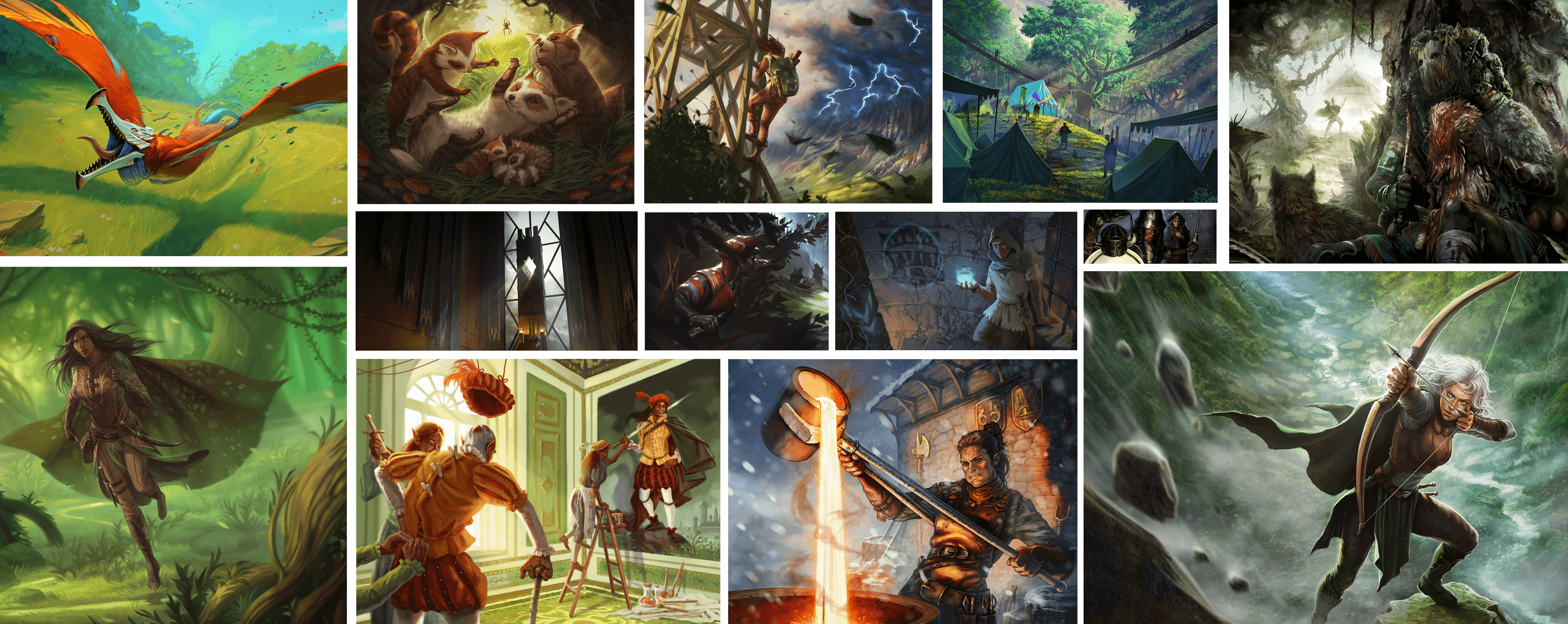
A small excerpt of Silberheim illustrations
But why don’t we do the illustrating ourselves? There are several reasons for that. On the one hand, the Art Team—as we will soon see—has plenty of other work to do. On the other hand, it would likely mean that not all card illustrations would ever be finished “on time.” Altogether, we need hundreds of illustrations for hundreds of Fragments. And an illustration is not created within just a few hours. According to our Art Director Hakim, the illustration process alone takes between 30 and 80 hours—without prior conceptual work.
Now let’s imagine that Zongi, Hakim, and Fiona had done nothing else since starting their full-time positions with us and needed an average of 50 hours per illustration. Never sick, never on vacation, no holidays, no creative block, nothing. That would result in around 213 illustrations today—which is far from enough, considering that around 500 Fragments could already be unlocked during our Alpha Test Phase.
But wait—don’t we currently have fewer artworks than that?! Correct. Many illustrations are still in progress and are currently represented by placeholders. However, our goal is to replace all placeholders with art as quickly as possible. And art comes from people—from the international artists we work with. That is something we want to maintain, even if it means accepting long production times for each illustration and even if the alternative would be far cheaper. Besides, otherwise the Art Department would probably send a contract-killing axe murderer after us (rightfully so).
What Else Does Silberheim’s Art Department Do?
213 illustrations could have been possible if Hakim, Zongi, and Fiona had devoted themselves to no other tasks. Theoretically. In practice, Silberheim would look very different in that scenario—and would still be quite close to the spreadsheet that Silberheim ECG once was. As Zongi explains: “For outsiders, many design elements are so self-evident that they don’t even think about the fact that these things have to be designed.” She is referring, for example, to the card design—apart from the illustrations themselves.
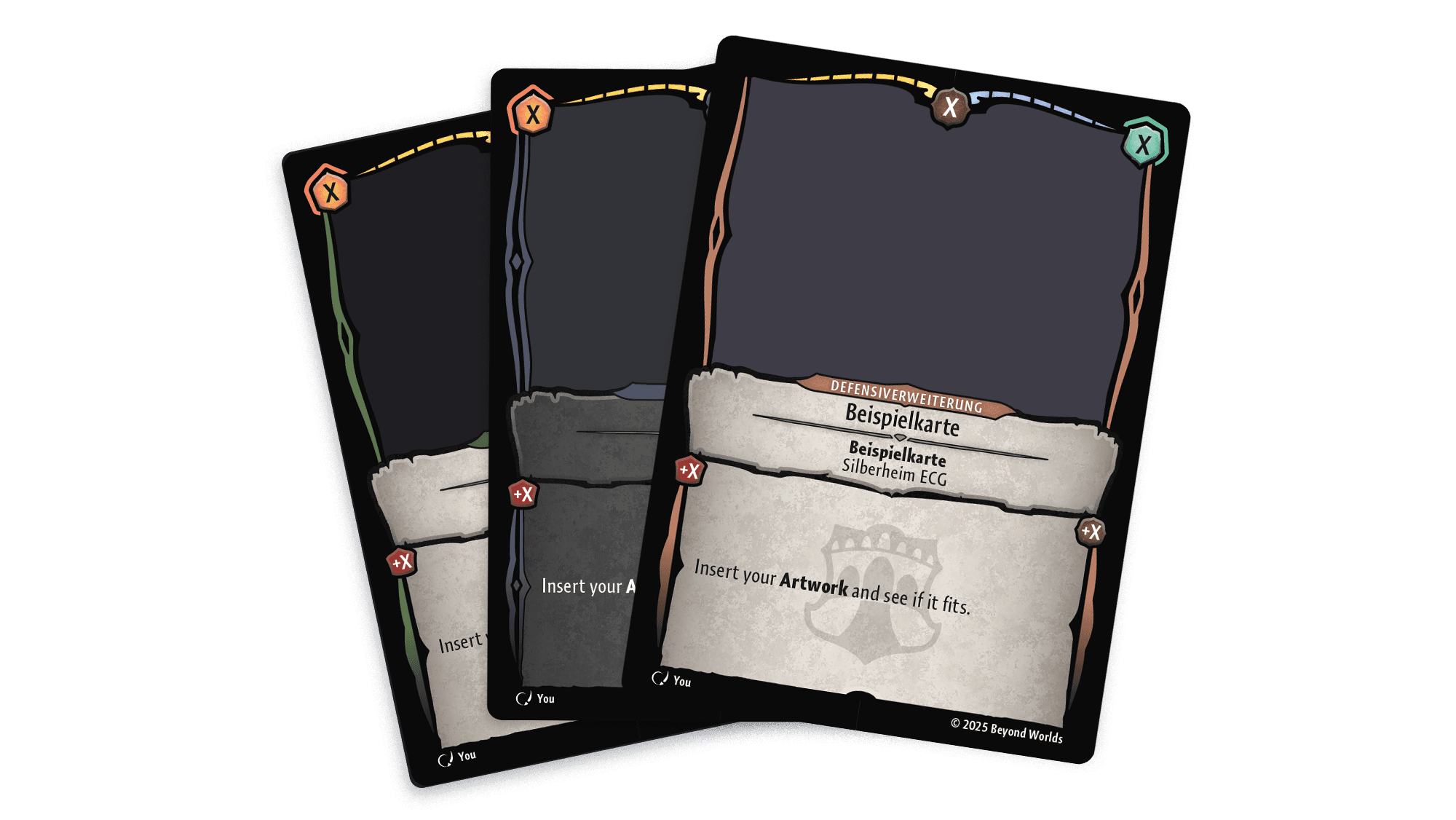
The card design itself also needs to be designed
Roughly speaking, there are three major areas in Silberheim’s art office. We’ll now take a closer look at them.
Concept Art (What Fiona Does)
Fiona is responsible for Concept Art. She has already talked a bit about this in our blog post about Arak and in the post about Wolby. In short, she is responsible for making our Lore visual. She conceptualizes and designs characters, flora, fauna, locations, goods, objects, and everything else that belongs to Silberheim. For example, she determines what Khelderon—the staff of Garda, handed over to Miko in Daemonion—actually looks like. Theoretically, it is described in the novel. Practically, it only becomes visible through Fiona’s work.
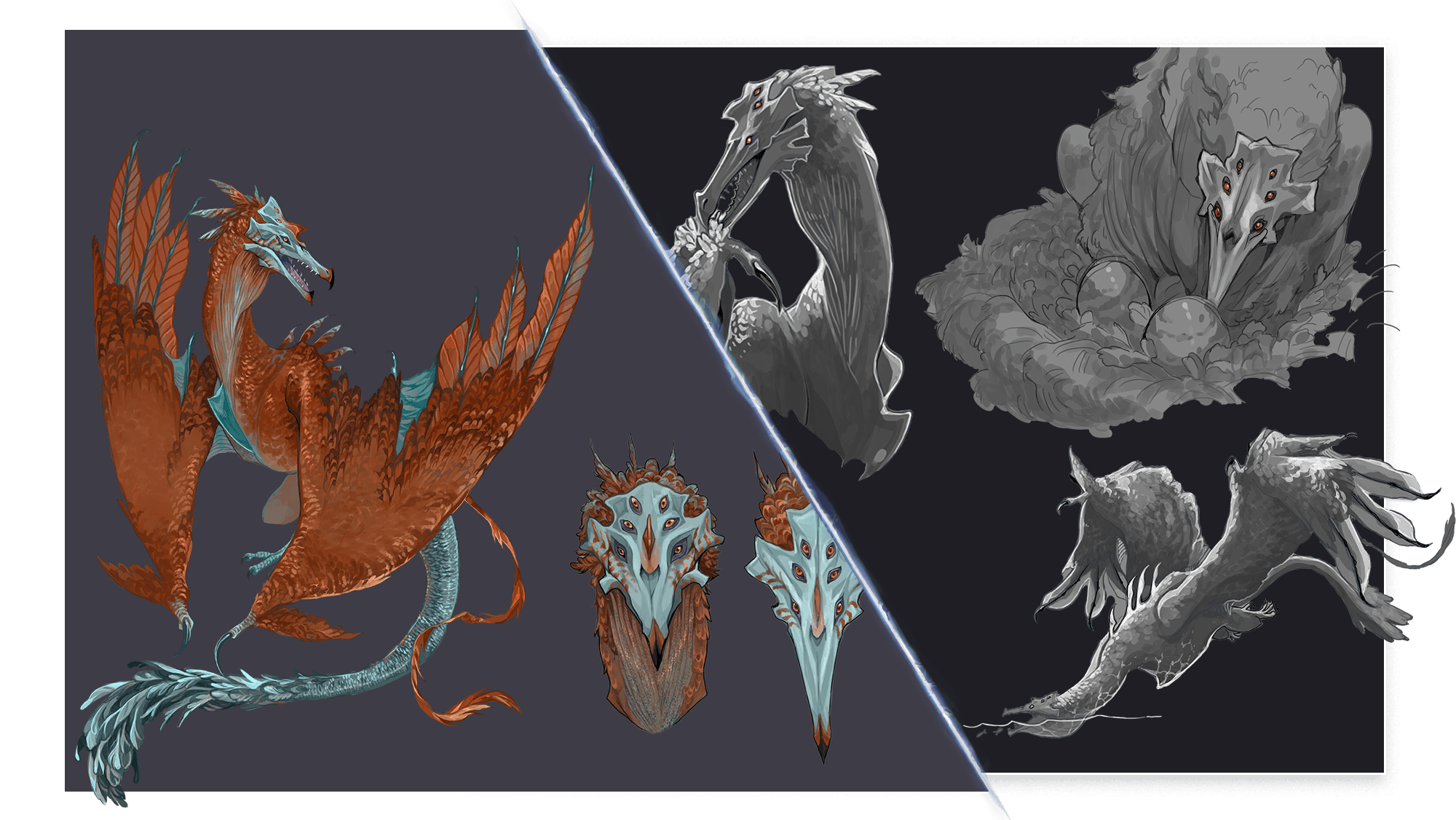
What the Arak has Fiona come up with here - something beautiful!
The main purpose of this is consistency and the prevention of chaos. If all externally commissioned artists had free rein in designing Khelderon, using only the relevant book passage as guidance, the staff would likely look different in every version. In its first appearance in the story, Khelderon is described rather vaguely:
“Miko took the staff and examined it with fascination. It was made entirely of intertwined roots and was exceedingly interesting to behold. At the upper part of the staff, just above the grip, the roots fanned outward. Despite its old and bony structure, the weave appeared almost alive.” (Dornbusch & Nyenhuis, 2022, p. 93)
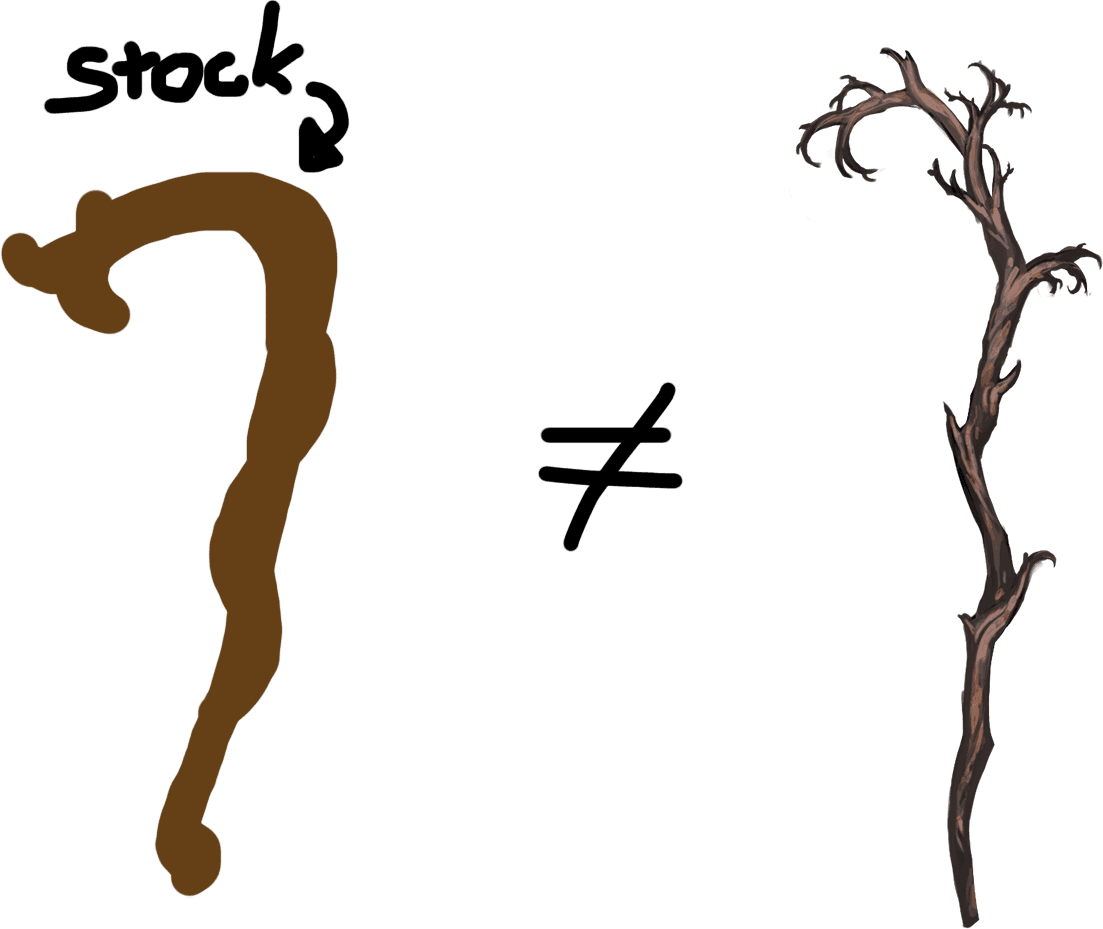
Some Stick vs. Khelderon, according to Fiona’s concept
Sometimes, descriptions like this do not even exist. Some lore elements are still vague, and it may only be known that they exist. How exactly they exist and what they look like often still has to be conceptualized and developed. The results can then serve as guidance for external artists. Fiona often also draws from what is stored in our Knowledge Base a kind of internal Silberheim Wikipedia. It is not yet complete, as Isdraia, the setting of Silberheim, is simply too vast. Where there are gaps, lore still has to be created and Fiona is often involved in that as well.
Accordingly, her work requires an immense degree of creativity. Occasionally, a bit of distraction helps. Indeed, Fiona is currently also heavily involved in the design of the game board for Silberheim ECG and has illustrated a new cover for Daemonion](https://silberheim.com/en/novel/). She therefore also supports areas that are not explicitly part of Concept Art.
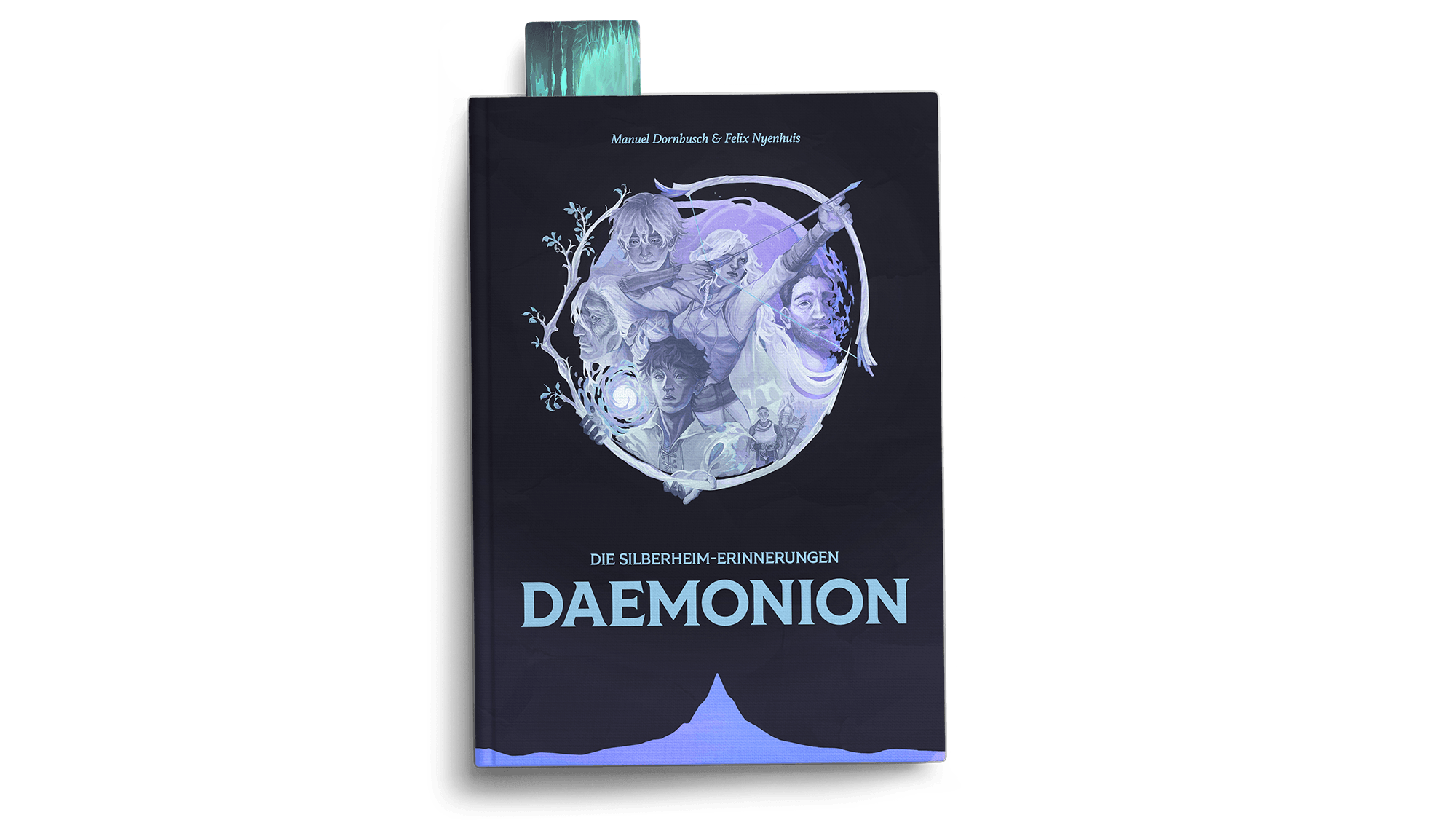
The new, current cover of Daemonion, by Fiona
Art Direction (What Hakim Does)
Let’s assume Fiona has finalized a whole range of concepts and designs that can now serve as guidance for Fragment illustrations. What happens next? This is where our Art Director Hakim comes in. He coordinates the collaboration with external artists. He researches which artists might be a good fit, communicates our ideas and expectations, holds video calls, gives feedback, clarifies questions, and much more. “This usually all happens in English, because they are scattered all over the world,” Hakim adds.
At the beginning, the focus is on developing concrete concepts for the card illustration not concepts in the sense of Concept Art (e.g., What do Glimmer Wolves look like?), but in the sense of the actual card illustration (e.g., How could Charging Glimmer Wolves look cool as an illustration?). Then sketches are exchanged, and a feedback loop begins. From rough drafts to light and form to colors, it takes a great deal of email correspondence until the initial hello turns into a finished illustration. “I write a lot of emails and organize things,” Hakim explains.
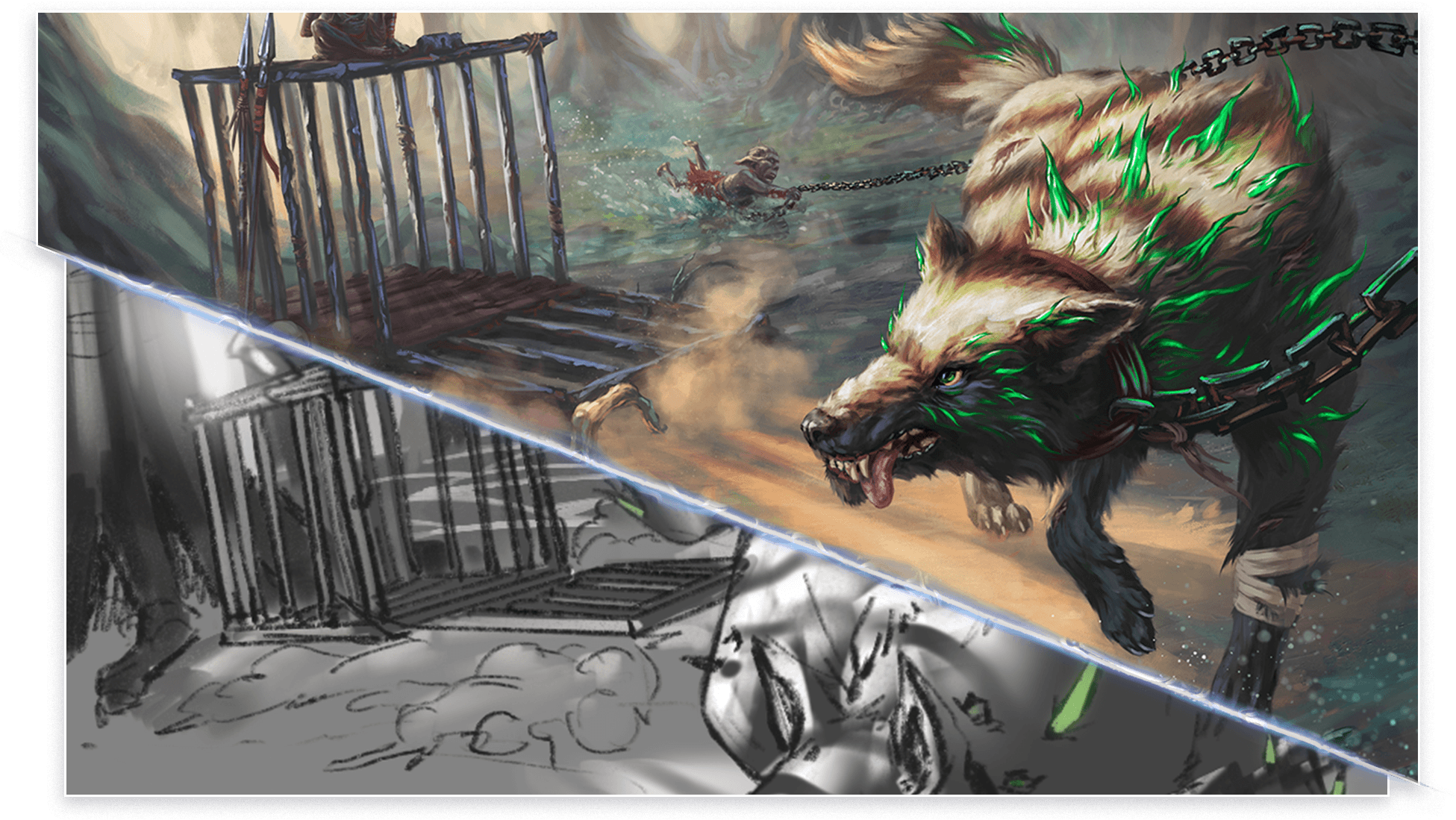
Hakim’s concept becomes a finished illustration by Zoe Badini
But he still paints himself from time to time. Just last year, for example, he illustrated a historically accurate version of Nanstein Castle in Landstuhl—which can now even be visited and admired at Landstuhl City Hall. He may or may not currently be working on another new illustration depicting a rather intriguing character from Silberheim. We may or may not report on that in detail. We may also forget.
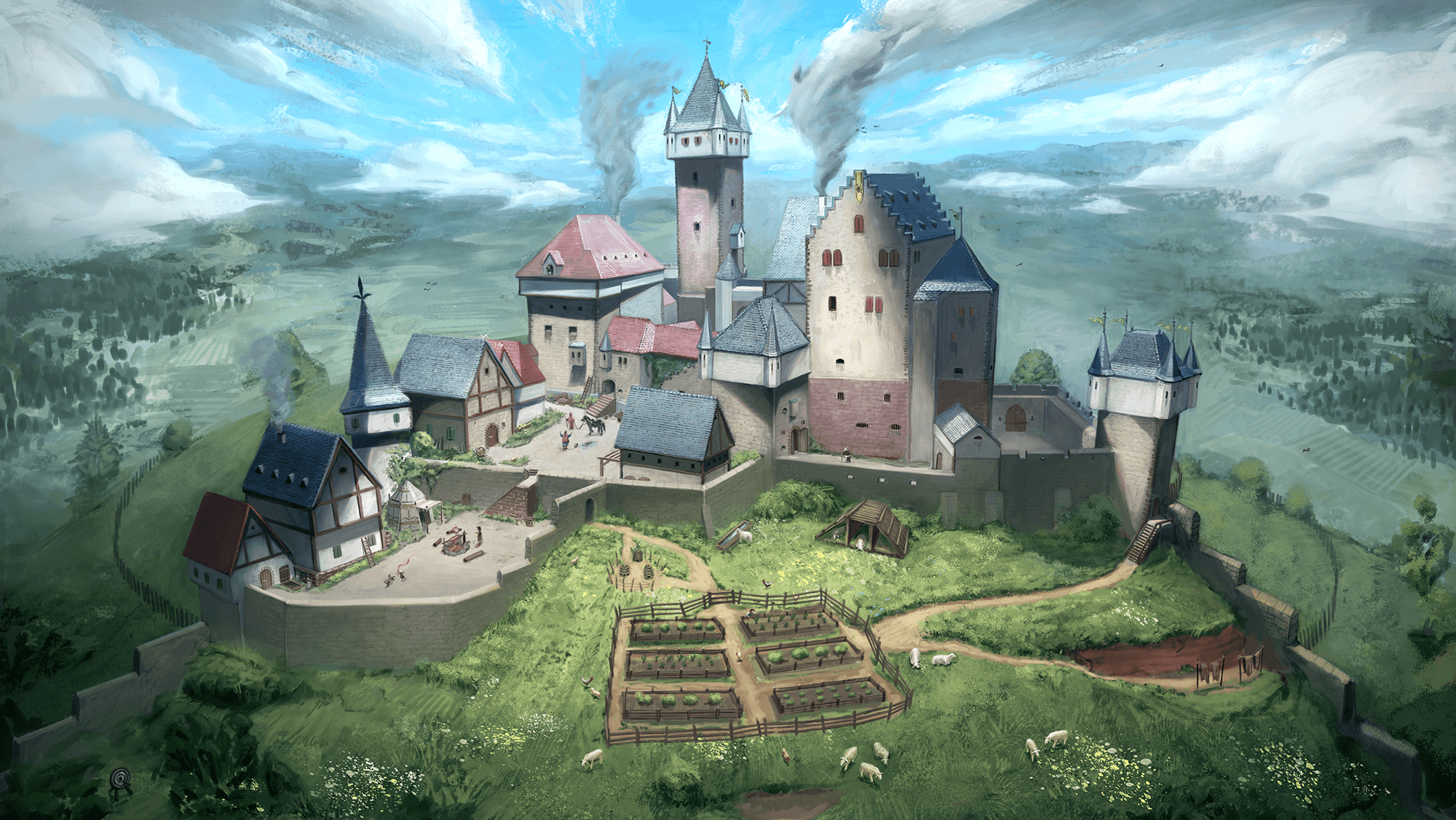
Nanstein Castle illustrated by our Art Director Hakim Pettes.
Like Fiona, Hakim is quite flexible in his role and occasionally supports other areas as well such as World Building or the interface of Silberheim Evolving Card Game.
Creative Direction (What Zongi Does)
Now let’s assume Hakim has either created a new illustration himself or received one from an external artist. What happens next? This is where things may get a bit complicated. What currently appears to be an idealized sequence implying that the next step is the final one in a linear process is only partly true. Because as Creative Director, Zongi is not just responsible for something at the end of a process, but is instead an omnipresent design authority who oversees everything and pulls the strings everywhere.
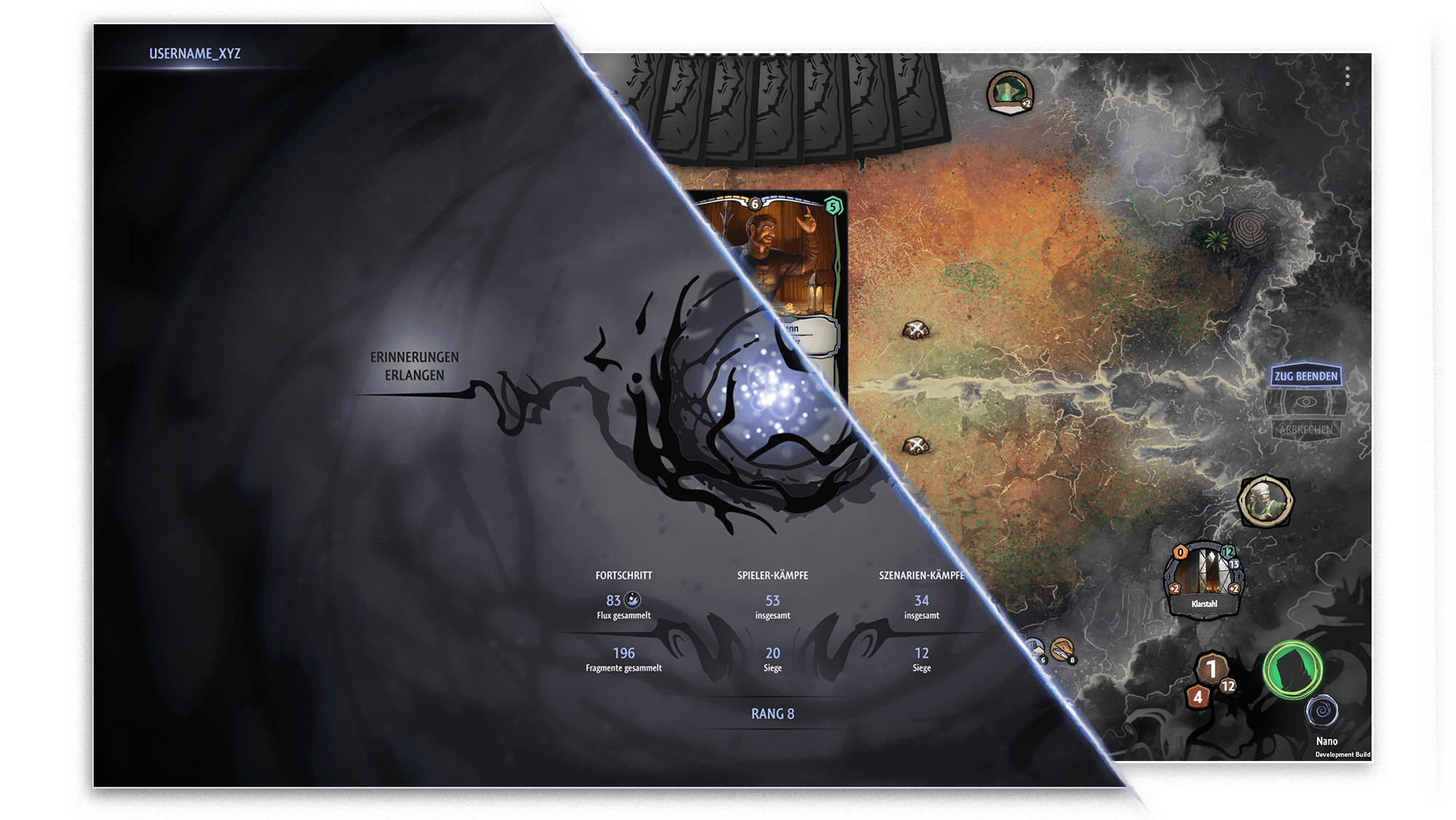
Exciting interface developments are happening with and thanks to Zongi’s expertise.
Zongi is responsible for the branding of Silberheim. She keeps an eye on all kinds of design elements to ensure consistency. She develops and oversees the project’s visual identity and has her fingers in almost everything except for the illustrations themselves. As a result, she is involved with almost all areas at Beyond Worlds. Our game, Silberheim ECG, was largely shaped in its interface design by Zongi; every seemingly insignificant button or label is a conscious decision made by her. She also supports the Marketing Team, sometimes hands-on and sometimes by adding her designer’s two cents. Within the Art Department, Zongi naturally also gives feedback. In this way, she holds Silberheim’s overall visual identity together.
Fake News: So They Do Paint After All!
Particularly attentive readers may have already noticed that this article raises a crucial question. Anyone who has taken a closer look at certain Fragments of Silberheim or paid attention in the past knows that the Art Department has indeed created card illustrations before. So they do illustrate. Just not on a massive scale.
If it were up to Hakim, he would illustrate much more. “I would love to paint all day,” he grins. “My goal is to get better and faster, so that one day I can finish good illustrations within 20 to 30 hours.” But constant improvement also has consequences. “I become less satisfied with my own work over time. When I look at Sturmkeiler today, I would do many things differently.” By Sturmkeiler, he is referring to the Fragment Agotho, Sovereign of Err, which Hakim illustrated for Silberheim Evolving Card Game. It is also one of the promo cards from our past Alpha-Test Phase.
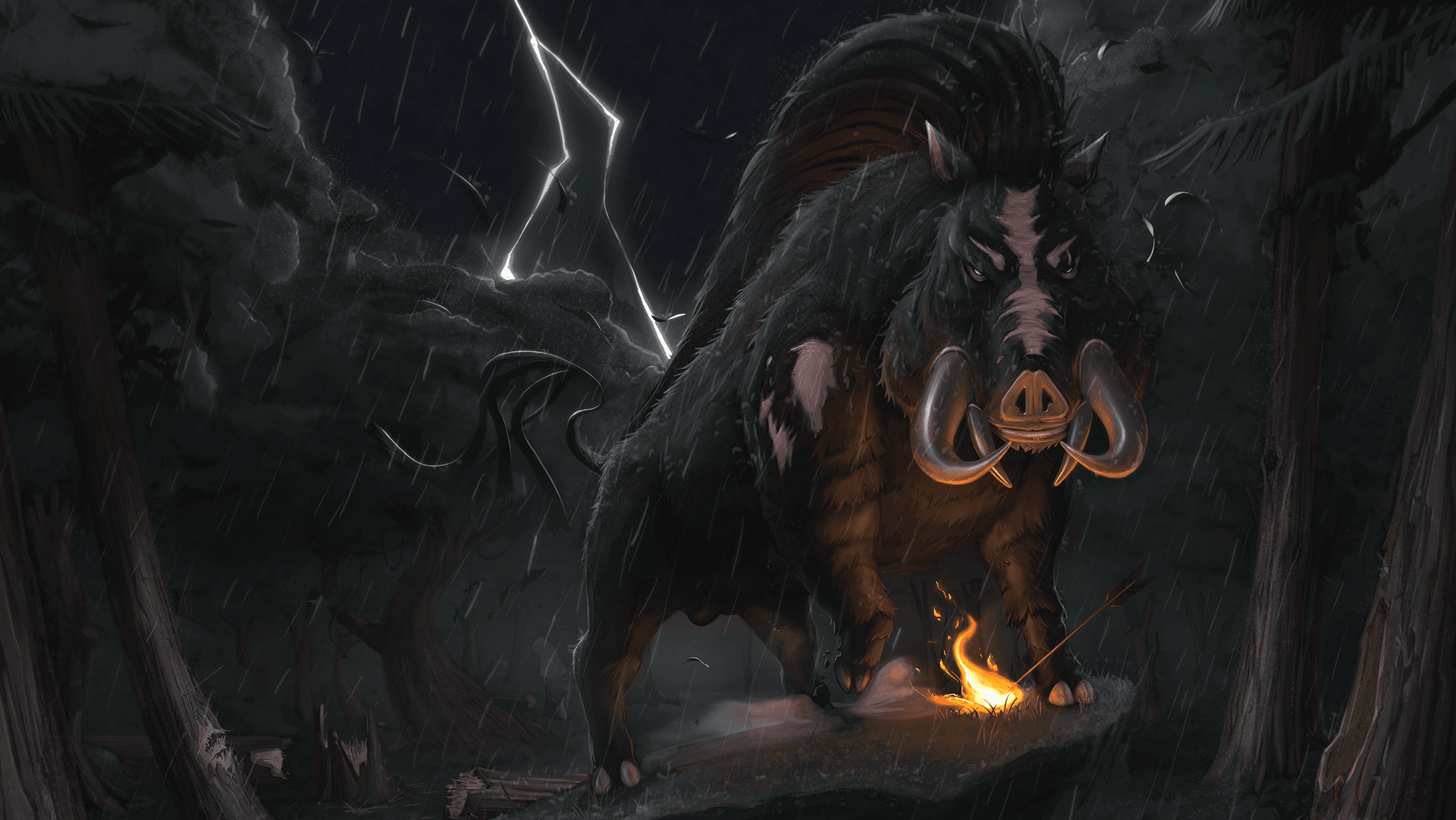
Agotho, Sovereign of Err by Hakim Pettes
Zongi has created two illustrations herself: Waldbento Beast and Bento Hatchling roughly described as ancient, dinosaur-like beasts. Unsurprisingly, Zongi also struggles to be truly satisfied with these illustrations. In fact, they are already a few years old and were created during her internship in 2022. At that time, she was originally supposed to work on Concept Art – Fiona was still in the middle of her studies and had no idea that Beyond Worlds even existed. It quickly became apparent, however, that Zongi was not bad at this “graphic design” thing at all – possibly due to her previous educational background. She then pursued this path at Beyond Worlds.
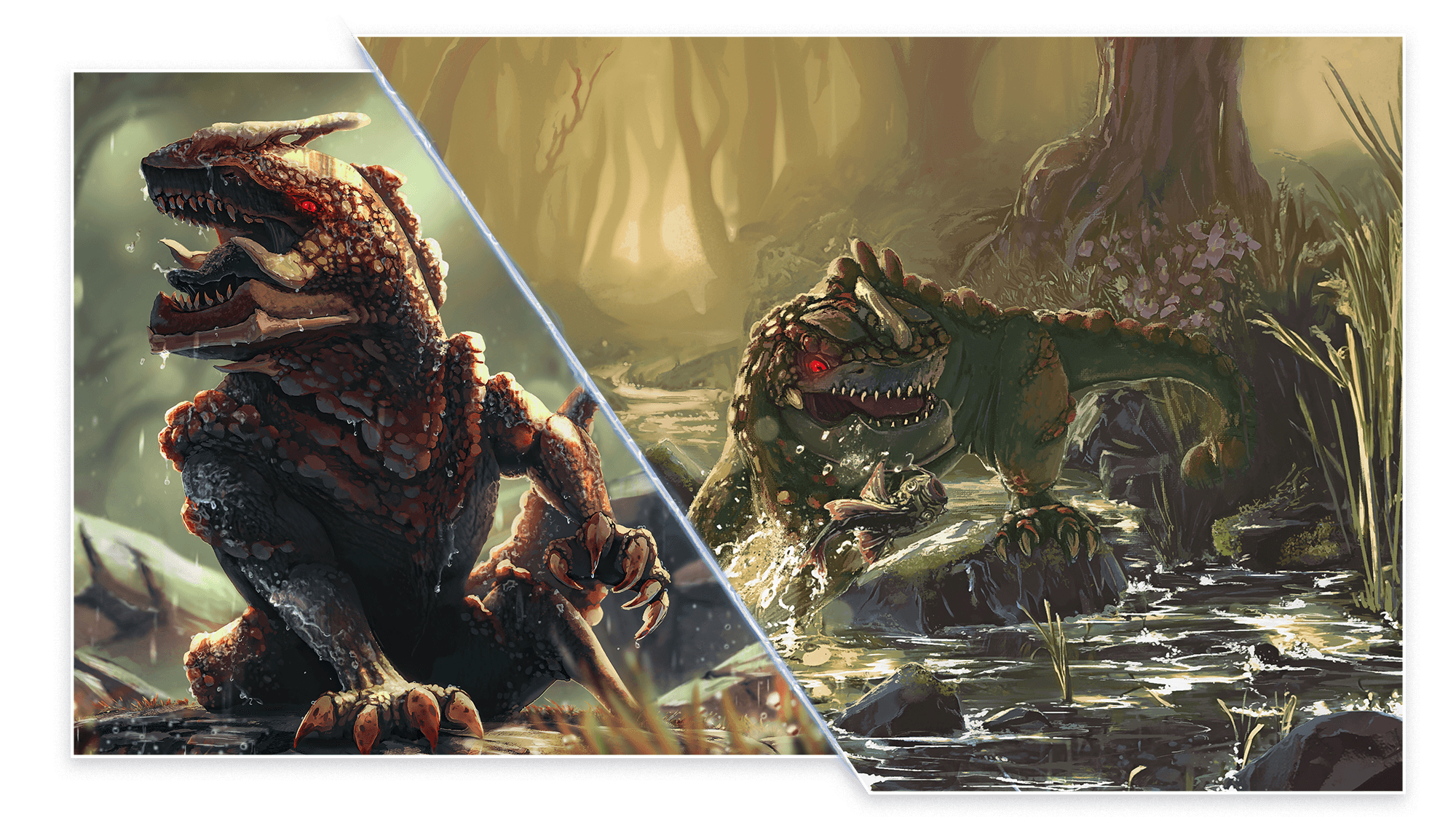
Waldbento Beast and Bento Hatchling by Zongi
Fiona also took a brief detour into illustration and worked on Glenmor of the Gate. This was offered to her during her internship as a way to do something other than Concept Art—which she does not see as a negative thing at all. Still, she took on the task, and the illustration was created. It was the first time Fiona completed a “full” illustration. She recalls: “It helped me a lot to improve, especially from a technical perspective.”
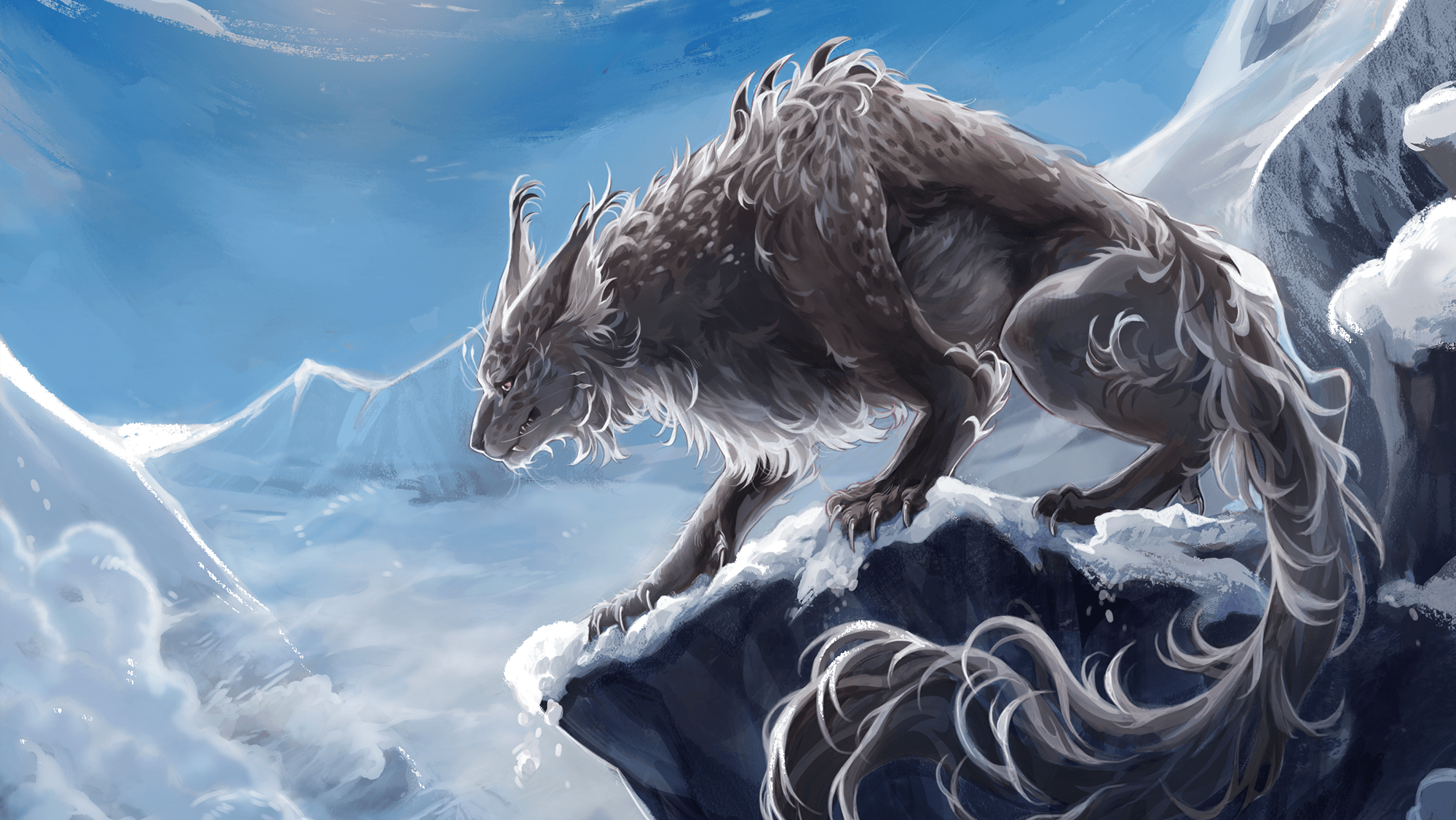
Glenmor of the Gate by Fiona Kämmerer
If anyone knows a good cure for Impostor Syndrome, please get in touch.